
Our hotel in the Cathedral Quarter of Belfast, was in the perfect position. A short walk into the hustle and bustle of the city centre, yet with bars and restaurants also on our doorstep. We also had easy access to the majority of sights and having returned our hire car, our adventure today was going to be on foot.
We were crossing the River Lagan, passed Big Fish 🐟 and towards, what is now known as, the Titanic Quarter, to the Harland and Wolff docks where the mighty ship and her sister ship, the Olympic, were built side by side.

Although Harland and Wolff still have a working dockyard, some of the area, including the slipways have been taken over by the incredible Titanic Experience. We knew it would be amazing and emotional, but we were blown away.
The purpose built exhibition centre, built of steel, represents ships hulls and glistens in the sunlight like the iceberg that sank it. A sculptural sign outside leaves you in not doubt you’ve arrived.


It is a self guided audio tour, suggested to take 1.5-2 hours. 8 storeys high and with 9 interactive galleries, we anticipated it might just take us a bit longer. We were taken on a fascinating journey from the initial vision of the ship, through her construction and her eventual tragic sinking.
 A collaboration between Harland Wolff and the White Star line, the Titanic and her sister ships were built to rival Cunards passenger ships Lusitania and Mauretania. Our journey started as Belfast was starting to boom, with two tobacco companies opening together with the busy shipyard, but divisions were also starting to show.
We travelled passed some of the original dockyard gates, towards the scaffolding, which stood around the ships as they were built. A lift took us up the scaffolding and onto a clever ride, winding us on a journey through the various roles of the dockers. From the furnaces, to installing the rivets, it was hard, hot, heavy work, with no health and safety regulations.





On 31st May 1911, at 12.15, the Titanic was launched. Our view from the large window was down the slipway, from where she first entered the River Lagan, before being towed to a dry dock, where she would be fitted out, and take sea trials, ready for her maiden voyage.


Mock ups of the cabins from First Class on the upper decks down to Third Class in the depths of the ship, gave an insight into the types of comfort different passengers received. From large suites,with seating areas, windows and private facilities to tiny cabins with bunk beds, a single wash basin and shared facilities.


Out on deck, with the waves slapping the sides of the ship, we were  taken along on her maiden voyage. Setting sail from Belfast, with just a few passengers and the crew aboard, she headed for Southampton, where the majority of passengers boarded and the holds were stocked with provisions for the trip. Across the Channel, more passengers boarding in Cherbourg, France and finally Queenstown, South Coast of Ireland, were mainly third class people alighted, emigrating to the States in search of a better life.
In the next room the lights were dim and we learned the details of that fateful night. The crew had been aware that icebergs were in the vicinity, however the key to the Crows Nest, where the strong binoculars were housed, had been inadvertently left behind in Southampton. The look out was therefore using his naked eyes to spot any hazards. With a clear, moonless night and no winds, the sea was like glass making spotting icebergs more difficult. By the time it was spotted it was too late to divert. There were only 16 lifeboats. As the ship was deemed unsinkable and lifeboats interfered with the views for First Class passengers, several in the original design were removed from the final plan.
Already incredibly moved by the stories we had read, our route took us downstairs, passing an entire wall filled with the names of those who perished. Everyone descended slowly and silently taking in the enormity of it all as they went.
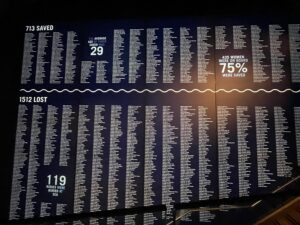
The World has always been intrigued by the story of the Titanic and in the late 1970’s Dr Robert Ballard set off on a quest to find the stricken ships final resting place.
It took almost a decade, the help of the US navy, technological advancements and one final attempt to find the wreck. The penultimate room to the exhibition tracks his and his teams journey. The highs and the lows. Almost giving up, and the euphoria when they realised at last it had given up its hiding place.


As we took the stairs down to our final destination, a replica of the Titanic floated before us, beneath it a glass floor gave a simulated view of the wreck sitting on the sea bed. Around the room glass cases held memorabilia, a violin owned by one of the musicians on the ship, a fur coat belonging to a stewardess and a pocket watch. Another haunting reminder of the people who boarded the famous ship.


An absolutely amazing exhibition. A complete journey through time, from conception to building, from fitting out to boarding, from enjoying the ship to the fateful sinking. All presented in an informative, interactive yet moving way.
If you find yourself in Belfast, I would highly recommend a visit.

We had added an outdoor discovery tour to our ticket. Beginning outside the main building, our guide informed us that the exhibition originally was a lonely sight on the edge of the docks. It is now surrounded by new homes, hotels and a leisure centre, bringing new prosperity to the City.
As the rain started to fall, we were whisked inside and introduced to Harland and Wolff’s original headquarters, now a beautiful hotel. We were taken into what was one of the previous offices, where we were told details of the Titanic design were discussed. The beautiful room looked down onto the drawing rooms, where the plans were drawn up, now a light bright bar. During the refurbishment, surplus tiles, used for the ships’ swimming pools, were discovered and used to tile the sides of the bar. Perfect.
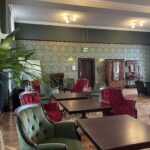


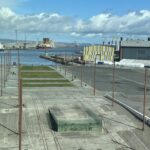 Moving to the rear of the exhibition building, we stood looking along the iconic slipway. It is now the Titanic Memorial Garden and on the adjacent Olympic slipway four grass lawns alternate with timber decking to illustrate the proportion of Titanic’s victims and survivors from each of the passenger classes and crew, with the names of the dead, permanently set in vertical glass panels on the slipways. The lamp posts represent the uprights of Arrol Gantry, one of the world’s largest cranes.

Turning round we re-entered the building and took the lift up a few floors, enabling us to look down into the enormous light filled atrium. The four entrance doors are accurately placed at North, South, East and West, with a magnificent, centrally placed compass giving perfect directions.
As we headed outside, the beautiful, cloud free skies had warmed the air a little. It had been an incredibly informative and interesting day, but we still had one more exhibition to explore.
***************
The restored SS Nomadic sits in a dry dock just a short stroll from the Titanic experience. The Nomadic was commissioned by the White Star Line as a tender ship, to ferry passengers to and from dock, as the Titanic and Olympic were too large to enter the likes of Cherbourg. Holding up to 1000 passengers and their luggage, it was designed with similar comfort as the great ocean liners themselves.
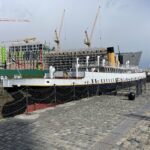
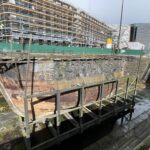
The upper deck was divided into first class passenger areas at the fore of the vessel and second class at the rear. With bar and lounge areas passengers could travel in comfort. The lower deck, not quite so inviting was reserved for third class passengers.

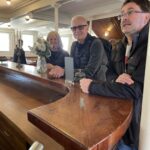

Apart from its tendering duties, the ship also served during both the world wars. The exhibition took us through its long, illustrious history, both as a tender and its war service, together with the restoration to its former glory.
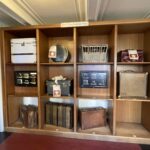

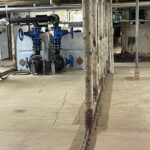


A fantastic step back into the history of two very different ships, whose lives became entwined, carrying some of the same passengers, albeit just for a short moment in time.
A brilliant way to spend the day, and what better way to digest everything we had learned, than a beverage in the bar at the Titanic Hotel.


