 The birthday gifts, I received in February continued to keep me busy throughout May, and included a trip to the dockyards in Chatham. I have watched the drama, Call the Midwife since it began in 2011 and with its outside scenes filmed amongst the old warehouses and docks in Chatham, my daughter had gifted me tickets for a location tour.👏👏
The weather was on our side, and our visit coincided with one of the few dry, sunny days we had in May. We arrived in time to check in and book a couple of other tours on site before meeting our midwife for our 90 minute tour.
She was either a super fan or had been taking the tours for so long that she knew the stories from all the series inside out. 😳
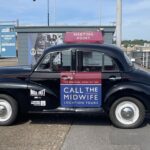

Call the Midwife, is based on the memoirs of Jenny Worth an East End midwife in the 1950’s. We started our journey at HMS Cavalier, which had been used in several stories, including the delivery of the Captain’s daughter’s baby and another in which, a young girl is sent to visit her family in Jamaica. Our midwife had a story board of photos to remind us of some of the scenes.
As we passed the Admirals office, across the street, we were advised that the facade plays the part of the London Hospital where many of the patients are transferred in the series. Old milk floats used in the drama trundle up and down the street, being used to transport goods around the dockyard on a daily basis.


We wandered through partially cobbled streets and her pictures and tales brought back memories of one of the midwives learning to ride her bike along the street, and another where of the Nuns has to break up a fight between pregnant women and direct them to the anti natal clinic.
She explained how the streets are transformed for filming, with the washing strung high above the cobbles, various normally plain doors have props popping outside to convert them to the police station and the pub. There are children’s games chalked onto the wall, which remain all the time, as it might damage the ageing brickwork to keep scrubbing them off.


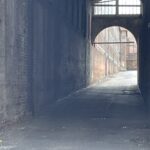

We saw the little patch of grass outside the church, which is turned into a graveyard and took a walk through the gardens, taking a photo on the bench where one of the midwives’ engagements took place.
The interesting tour ended at a small “museum” displaying costumes from memorable shows, mock ups sets from the shops, to the dining room at Nonatas House and the Doctors surgery. The doll, which depicted a thalidomide baby, in one story certainly tugged at the heart strings. We were born during the early 60’s as babies were being born with the condition 🥲


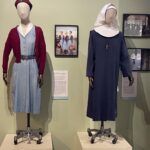


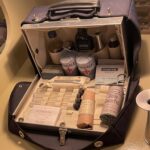

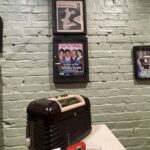

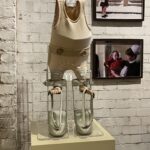
Some incredible stories have tackled very emotive tales of the times. The tour brought back some memories, so on returning home we watched the first ever episode, spotting areas we had walked through on our visit earlier in the day.
🤰🩺⛵️🩺🤰
The dockyard itself has so much more to offer, and the tour ticket includes all the other facilities for the day. It was knowing where to start. We climbed aboard HMS Cavalier. It now sits in the dock where HMS Victory was built. Cavalier was a WW2 destroyer, launched in 1944 and decommissioned in the early ‘70’s. The technology and living conditions were very primitive, by today’s standards. Amazing to think that the, now antiquated, equipment and lifestyles gave our sailors the confidence and strength to help win the war.


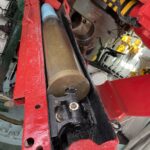
Next stop was walking the decks of HMS Gannet, a sloop of war (warship) built in the late 1800’s. A couple of its amazing guns are still aboard, but it seems it was more of a surveillance and protection ship. It could be powered by either sail or steam and surprisingly in a good wind, it could travel faster under sail than it could under steam. For many years during later life it was used as a training ship, before entering retirement and enjoying life at Chatham Dockyard.


A short stroll across the dock and our next adventure awaited. When we booked on the submarine tour, we weren’t advised we’d need to swing ourselves through the small hatches 😳. As the Bestie and I were wearing dresses, it might become a bit distracting for anyone standing in front of us 🤣
HMS Ocelot is almost as old as I am and was the last submarine built in Chatham Dockyard, so it’s quite fitting that it’s also spending its retirement there too. Being one of the Oberon Class made it one of the quietest submarines, ideal for surveillance operations and served during the Cold War. Clocking up 90,000 miles during its time in service, it boasted some of the highest spec technology of the time.


Our guide was very knowledgeable and explained how the submarine was able to dive and re submerge. During our tour, we were able to visit the cramped living and sleeping quarters, together with the working areas of the vessel, taking a peek up the periscope. As we swung our way through the hatches, we managed to maintain our dignity. The equipment and living areas seemed very outdated by today’s standards. Life below decks could have been quite testing as the crew would have been spending all their working and free time in tight close quarters and I can imagine with a full crew on board it would have been unbearably warm at times.
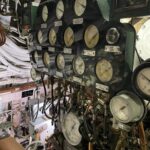


Very interesting wander around three incredibly different vessels
⚓️⛵️🚢⛵️⚓️
The dockyard is full of surprises, and our next stop was the Ropery, where for the past 400 years rope has and continues to be produced. The rigging for sail ships, such as the Gannet, who is now enjoying retirement at the dockyard, and ropes to drop the anchors, were made here. An endless variety of thickness, length and uses.

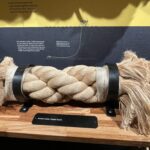

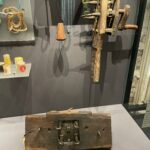
A wander around the museum lets you explore the vast array of tools used by craftsmen and explains their uses. It was incredibly hard, tiring, monotonous, manual work. The hours were long and the starting pay minimal. But as you learned your craft, it was possible to move to higher skilled and thus higher paid roles. With the introduction of machinery, although tasks were less strenuous, inevitably it meant there were fewer jobs.


Above the museum, we were treated to a talk on the history of the Ropery and the different processes of making rope. We heard of the different roles needed in the manual production line. A couple of our tour mates, were invited to get to work winding a piece of rope. Incredibly clever, but after 5 minutes they were exhausted and it took your thoughts to the poor soles who used to have to do the process all day long.


As the fibres are twisted and turned into rope, the length gets shorter and shorter, which explained why, as we descended into the Ropery, it was 1/4 of a mile long. An amazing space, where old machinery is still in operation as it remains perfect for the job. Rope makers spend a lot of their day travelling from one end of the line to the other and it seems quite often use bikes.


Today’s market is somewhat different to its origins, and ropes are also produced for gardens, zoo’s, cargo netting, rope ladders and dog leads to name a few. There are a couple of shops onsite, naturally, where you can buy their products.
Great interactive, interesting tour. Amazing to know that some old skills have remained much the same for centuries.
🪢 ⚓️ 🪢⚓️🪢
So much to see and do. We had a short while to see the RNLI 200 year anniversary exhibit, (on until September) showing off lifeboats and equipment used over the years. Amazing to see some of the boats that have been used in sea rescues, from a rowing boat through to the latest high tech vessel.
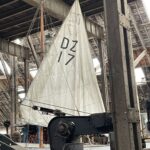
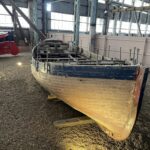


Very thankful to have them
The sun was still shining so we completed our fabulous day, with a cream tea (also part of the birthday gift 🎁), sitting outside the cafe watching the world go by and enjoying the warmth ☀️


Gosh such a beautiful day. So much to explore and so much history.
I would certainly recommend a visit. A normal day ticket also allows you to return as often as you like for a year 👍